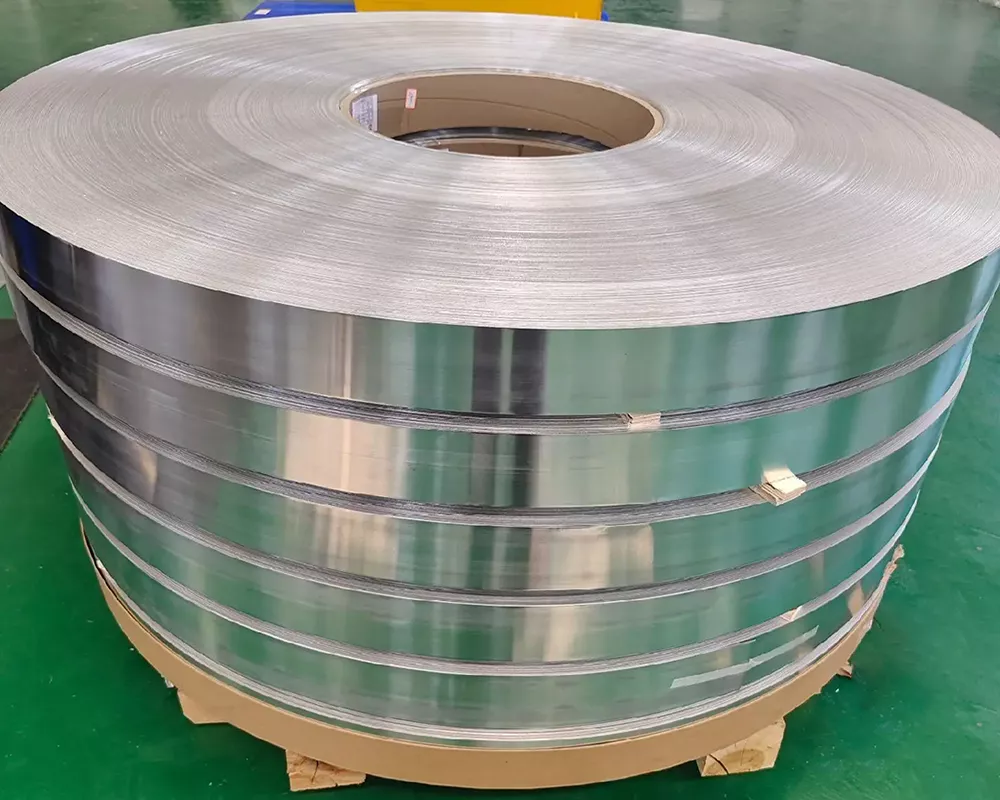
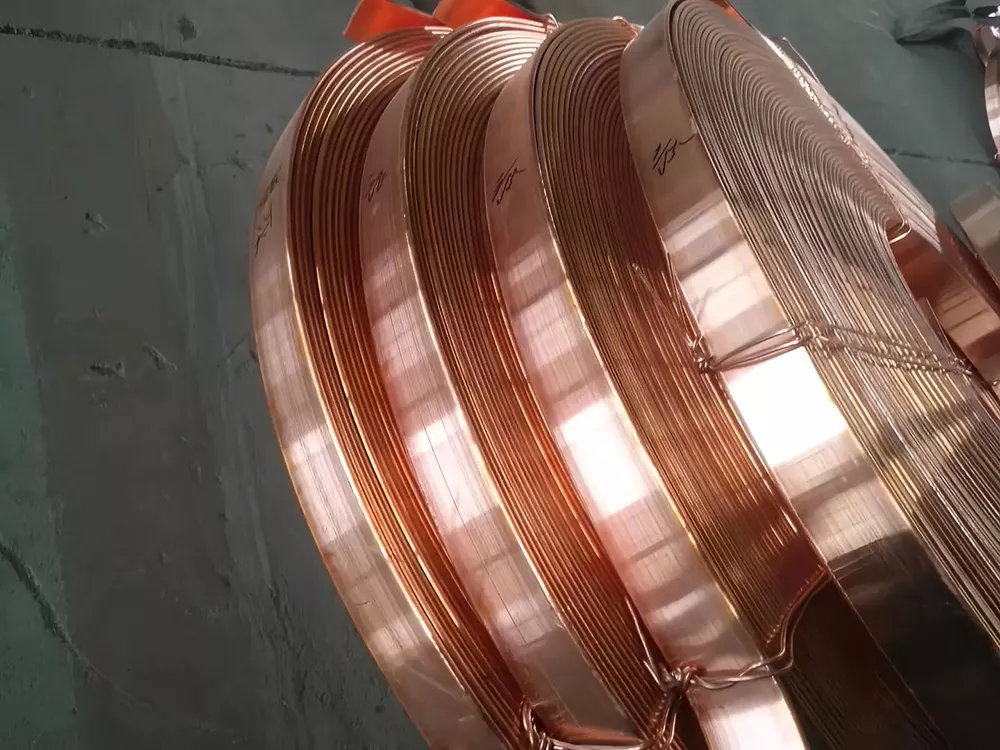
Featuring lightweight, high conductivity (≥61% IACS), and burr-free rounded edges, it complies with IEC 60404 standards and is widely used in oil-immersed and dry-type transformers as well as reactors, effectively reducing copper costs and overall weight.
-
Grades: 1060, 1050, 1070, 1350
-
Temper: O
-
Thickness: 0.2–3.5 mm and customizable
-
Edge Quality: Burr-free
Transformer Aluminum Strip Technical Specifications
|
Alloy
|
1050 / 1060 / 1070 / 1350
|
|
Thickness
|
0.08 – 3.0 mm
|
|
Width
|
10 – 1650 mm
|
|
Temper
|
O (Soft Annealed)
|
|
Conductivity
|
≥ 61% IACS
|
|
Edges
|
Rounded / Square / Chamfer
|
|
Thickness Tolerance
|
±0.02mm to ±0.08mm
|
|
Width Tolerance
|
+0.3mm to +2.5mm
|
|
Surface Treatment
|
Smooth edges, burr-free; can be oiled/passivated.
|
|
Paper Core Internal Diameter
|
Ø 150mm,Ø300mm, Ø400mm, Ø500mm paper core, special internal diameter core and without paper core on special request
|
|
Packaging
|
Wooden Pallet/Wooden Case
|
|
Delivery Time
|
7-10 working days
|
|
MOQ
|
2 Tons
|
Certifications & Compliance · Third-Party Testing
ISO 9001:2024RoHS / REACHIEC 60404-8-6
Proven Data: Continuous supply of aluminum strip to a well-known European transformer manufacturer for 36 months, achieving a 5% reduction in winding temperature rise and a 27% cost reduction (customer verified).
FAQ — Common Technical Questions
Is there any oil residue on the aluminum strip surface that may affect insulation?
All aluminum strips undergo degreasing cleaning and passivation treatment, with surface oil residue ≤5 mg/m², meeting transformer oil compatibility testing requirements.
What is the minimum order quantity (MOQ)?
The MOQ for standard specifications is 3 tons, while sample coils of 500 kg can be provided upon negotiation.
Can aluminum strip be used for high-frequency transformers?
It is recommended for power frequency and medium-frequency applications. For higher frequencies, copper strip or special laminated structures are recommended. Please consult our engineers for further guidance.
High-quality cable armoring strip including aluminum alloy and copper strips for power and communication cables. Custom sizes, fast delivery, global supply.
-
Grades: 5052 / 5154 / 5154A
-
Temper: H22 / H24 / O (customizable)
-
Thickness: 0.3–3.0 mm and customizable
-
Edge Quality: Burr-free precision slitting (≤0.01mm edge)
Cable Armoring Strip Technical Specifications
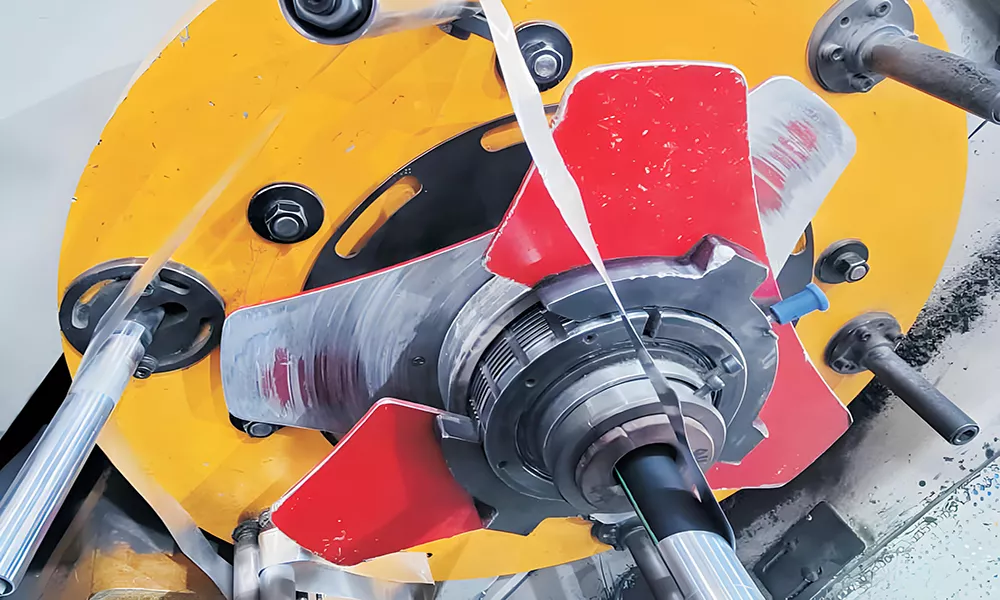
Haomei supplies high-performance cable armoring strips, including aluminum strip, copper strip, and shielding tape, designed for power cables, communication cables, and industrial cable protection systems. These materials provide mechanical protection, corrosion resistance, and electrical shielding, ensuring long service life and stable transmission performance.
|
Product
|
Grade
|
Temper
|
Key Info
|
Application
|
|
Interlocking Armored Aluminum Strip
|
5052/5154/5154A
|
H24/H22
|
Flexible, Coil ID 300–400 mm
|
Power cables, fire-resistant cables
|
|
Pre-rewound Aluminum Strip
|
5052/5154/5154A
|
H24
|
Custom coil, continuous supply
|
Armoring production line
|
|
Aluminum Shielding Tape
|
5xxx
|
O/H32/H24
|
EMI shielding, ID 55–250 mm
|
Solar & new energy cables
|
|
Aluminum Armoring Strip
|
5052/5154/5154A
|
O/H24
|
Non-magnetic, corrosion resistant
|
Industrial power cables
|
|
Welding Aluminum Strip
|
1050/1060/3003
|
O
|
For MI cable sheath forming
|
Fire-resistant cables
|
|
Color Coated Aluminum Strip
|
5052/5154/5154A
|
H24
|
Custom colors, durable coating
|
Identification cables
|
|
Armored Copper Strip
|
H68/H65/T2/TU
|
Y4/M
|
High conductivity copper
|
MI & fire-resistant cables
|
Cable Armoring Strip – FAQ
What materials are used for cable armoring strip?
Common materials include aluminum alloys (such as 5052, 5154) and copper strips, selected based on corrosion resistance and mechanical strength requirements.
What is the function of cable armoring?
Cable armoring provides mechanical protection, improves tensile strength, and enhances resistance to external damage during installation and operation.
What are the common types of armoring strips?
Common types include flat strip armoring, interlocked armor, and corrugated armor, depending on cable structure and application environment.
How is corrosion resistance ensured?
Corrosion resistance is ensured through proper alloy selection, surface treatment, and protective coatings such as zinc or anti-corrosion layers.