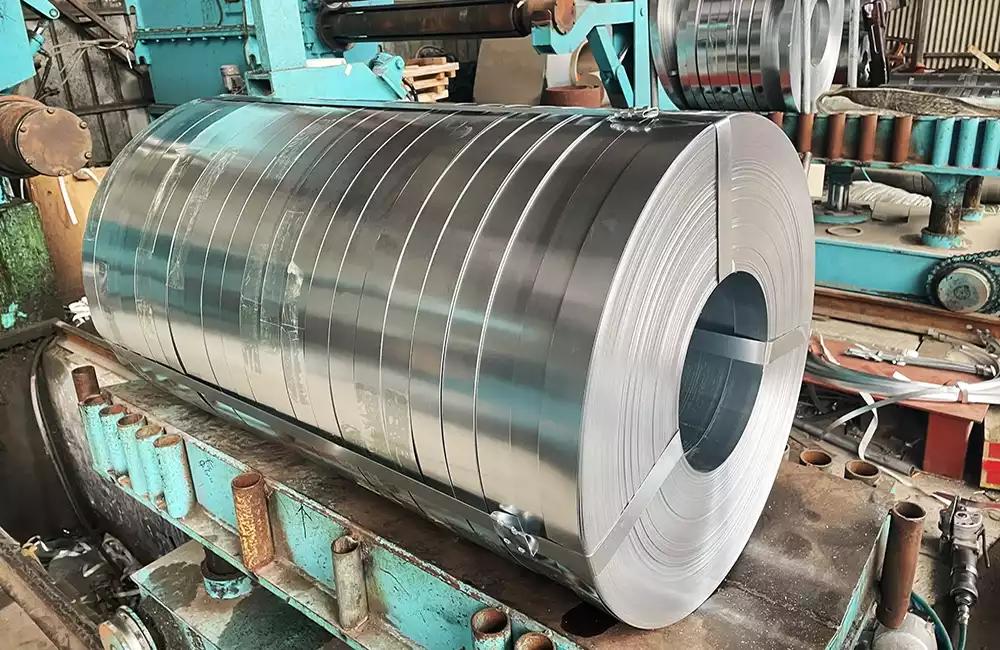
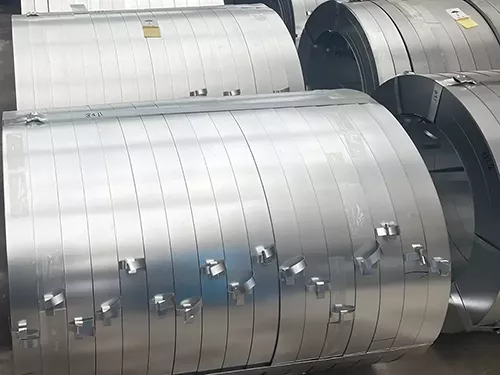
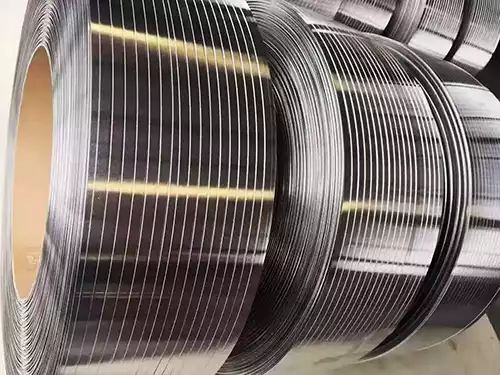
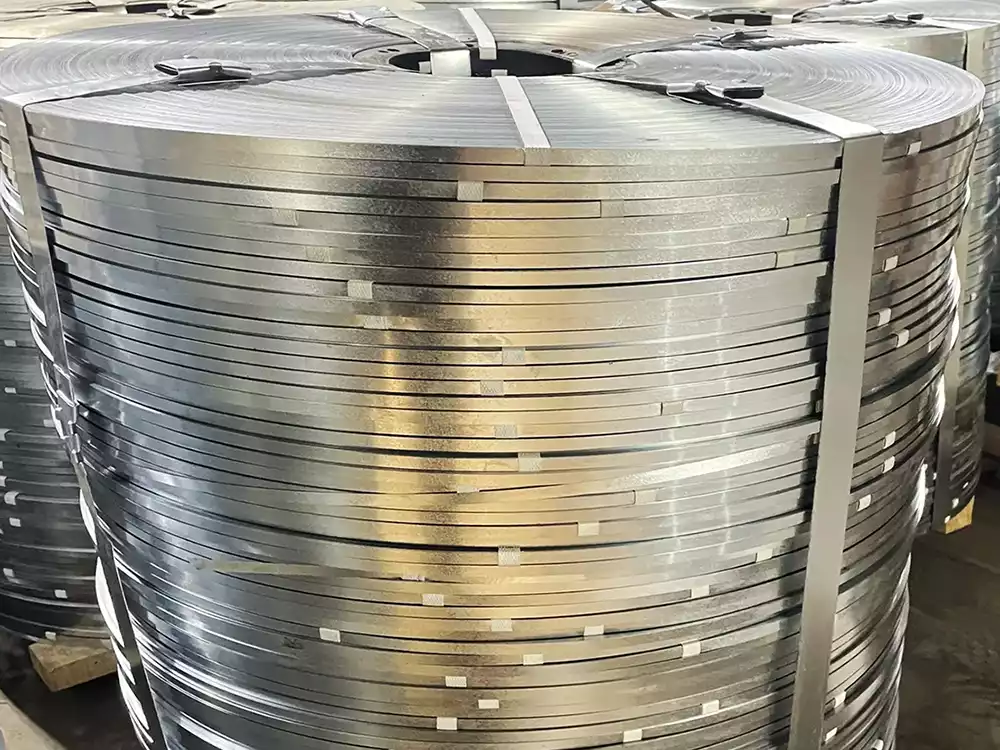
Lightweight, non-magnetic aluminum strip designed for power cable protection, offering excellent corrosion resistance and long service life.
5052
5154
1060
Aluminum strip (Aluminum Strip) is a core material in modern cable armoring systems, widely used in the manufacturing of mechanical protection layers for power cables, communication cables, and industrial control cables. This material forms a continuous, dense metal protective layer, providing reliable structural reinforcement and external protection for cables.
In armored cable structures, aluminum strip is mainly used to build the outer mechanical protection barrier, which can effectively resist external pressure, impact, and abrasion, while also blocking moisture intrusion and reducing electromagnetic interference (EMI) affecting signal transmission. Its non-magnetic characteristics give it significant advantages in high-voltage power transmission and sensitive communication systems.
Compared with traditional steel tape armoring materials, aluminum alloy strip offers lighter weight, superior corrosion resistance, and better formability, which can significantly improve cable installation efficiency and reduce the overall system weight.
Aluminum Strips for Cable Armoring Specifications
Product Name
Aluminum Strips for Cable Armoring
Grades
5052, 5154, 5154A, 1060
Temper
O, H24, H22
Thickness
0.4mm-2.0mm
Width
9.5mm, 12.7mm, 19mm, 25.4mm, max 1250mm
Edge
Slit/Round
Quantity Tolerance
±10%
Paper Core Internal Diameter
150mm, 200mm, 300mm, 400mm, 508mm, etc.
Surface Treatment
The strip has a smooth surface, free from scratches and impurities
Packaging
Wooden Pallet/Wooden Case
Payment Terms
30% TT deposit and 70% balance before shipment, 100% LC at sight
Delivery Time
7-10 working days
MOQ
500 Kg
Sample
The sample of Aluminium strip is available
Remark
Aluminium foil strip can be customized
Aluminum Strip for Cable Armoring Tolerance
Thickness (mm)
Thickness Tolerance (mm)
Width (mm)
Width Tolerance (mm)
0.3
±0.02
25~50
±0.10
0.4
30~60
0.5
30~60
0.6
30~60
0.8
30~60
Aluminum Strips for Cable Armoring Grades
The most commonly used alloys belong to the 5000 series, including 5052, 5154, and 5154A. These grades are known for their high strength and excellent corrosion resistance. In addition, 1000 series alloys (such as 1050 and 1060) are also commonly used in applications where relatively lower mechanical performance requirements are needed.
For the armoring applications of high-performance cables, the selected aluminum alloy must have sufficient strength while also possessing the necessary flexibility to meet the bending radius requirements of cables during installation.
Aluminum Strips for Cable Armoring Chemical Composition
5052 Aluminum Strips Chemical Composition
Element
Content (%)
Aluminum (Al)
Balance
Magnesium (Mg)
2.2 – 2.8
Chromium (Cr)
0.15 – 0.35
Iron (Fe)
≤ 0.40
Silicon (Si)
≤ 0.25
Copper (Cu)
≤ 0.10
Manganese (Mn)
≤ 0.10
Zinc (Zn)
≤ 0.10
Others
≤ 0.05 each
5154 Aluminum Strips Chemical Composition
Element
Content (%)
Aluminum (Al)
Balance
Magnesium (Mg)
3.1 – 3.9
Chromium (Cr)
0.15 – 0.35
Iron (Fe)
≤ 0.40
Silicon (Si)
≤ 0.25
Copper (Cu)
≤ 0.10
Manganese (Mn)
≤ 0.10
Zinc (Zn)
≤ 0.10
Others
≤ 0.05 each
1060 Aluminum Strips Chemical Composition
Element
Content (%)
Aluminum (Al)
≥ 99.60
Iron (Fe)
≤ 0.35
Silicon (Si)
≤ 0.25
Copper (Cu)
≤ 0.05
Manganese (Mn)
≤ 0.03
Magnesium (Mg)
≤ 0.03
Zinc (Zn)
≤ 0.05
Others
≤ 0.03 each
1060: Best conductivity, weakest strength (shielding layer)
5154: Higher strength, better for heavy-duty armoring
Mechanical Properties of Aluminum Strips for Cable Armoring
Mechanical Properties of 5052 Aluminum Strip
Property
Value
Alloy
5052
Temper
O / H24
Tensile Strength
210–260 MPa
Yield Strength
≥130 MPa
Elongation
≥10–15%
Hardness
Moderate
Fatigue Resistance
Excellent
Formability
Excellent
Typical Application
Interlocked Cable Armoring
Mechanical Properties of 5154 Aluminum Strip
Property
Value
Alloy
5154
Temper
O / H22
Tensile Strength
240–300 MPa
Yield Strength
≥140 MPa
Elongation
≥8–12%
Hardness
Relatively High
Corrosion Resistance
Marine Grade
Strength Level
High
Typical Application
Heavy-Duty Cable Armoring
Mechanical Properties of 1060 Aluminum Strip
Property
Value
Alloy
1060
Temper
O
Tensile Strength
70–110 MPa
Yield Strength
≥35 MPa
Elongation
≥20–30%
Hardness
Low
Electrical Conductivity
≥61% IACS
Ductility
Excellent
Typical Application
Light Armoring
Aluminum Strips for Cable Armoring Edge Options
Slit Edge
The most commonly used and lowest cost option, suitable for general cable armoring applications.
May have slight burrs.
Suitable for mass production.
Rounded Edge
Edge is processed with rounded corners.
Reduces stress concentration.
Improves bending durability.
Deburred Edge
Polishing and deburring after slitting.
Safer and less likely to damage insulation layers.
Suitable for high-speed production lines.
Trimmed Edge
High-precision trimming for smoother edges.
Better dimensional stability.
Used for high-end cables / export products.
Armored Cable Aluminum Strip Features
High Strength
Provides excellent mechanical protection for armored cable structures.
Corrosion Resistance
Suitable for harsh environments including offshore and underground applications.
Lightweight
Reduces overall cable weight compared with steel armoring solutions.
Excellent Formability
Easy to bend and wrap during cable manufacturing processes.
Armored Cable Aluminum Strip Applications
Power transmission cables
Submarine and offshore cables
Communication and fiber optic cables
Industrial armored cable systems
Haomei Cable Armoring Strip Manufacturer
Haomei specializes in high-performance Cable Armoring Strip solutions for global power cable and communication cable manufacturers. Our products ensure superior mechanical protection, corrosion resistance, and long-term stability in demanding environments.
Manufacturing Capability & Quality Control
Production Line
Continuous rolling process
Precision thickness control
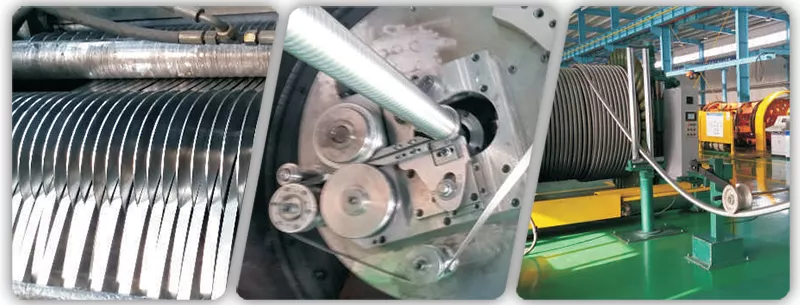
Slitting & rewinding systems
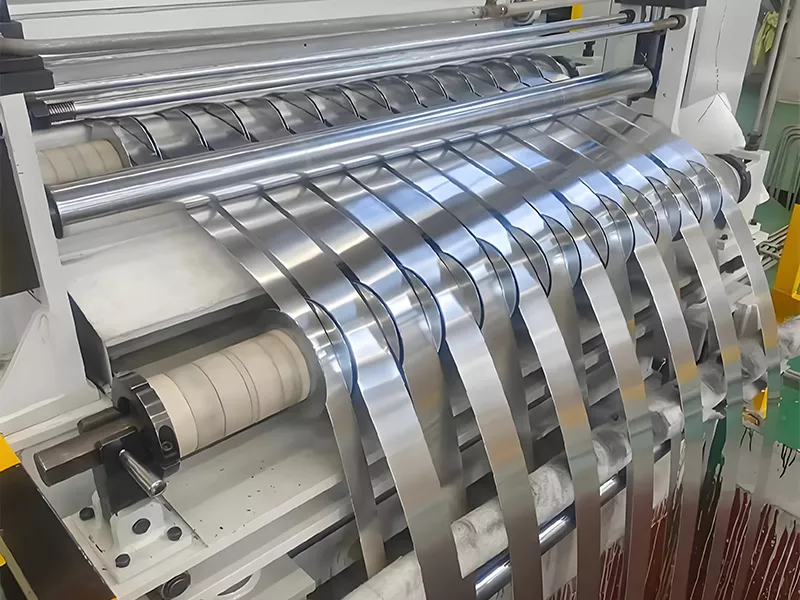
Aluminum strip rolling production line for manufacturing cable armoring aluminum strip with precise thickness control and stable surface quality.
Quality Inspection
Tensile testing
Conductivity testing
Surface defect detection
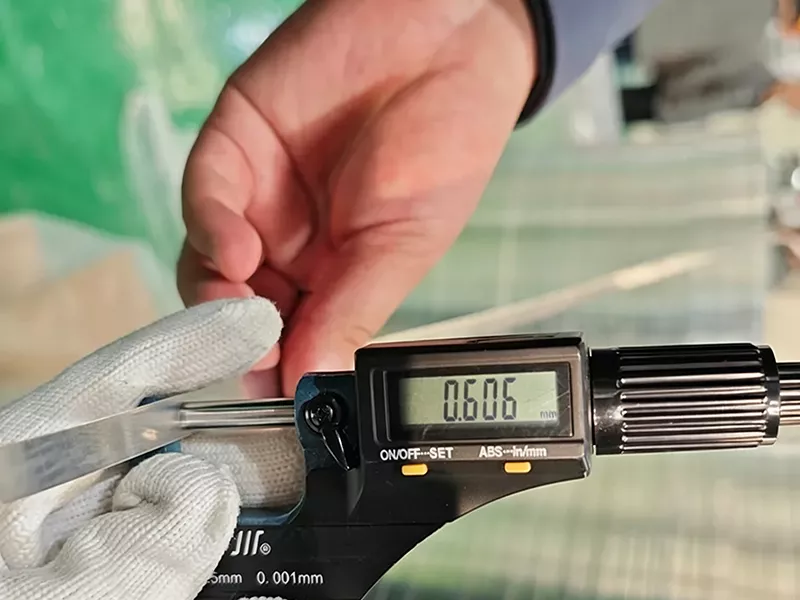
Cable armor aluminum tape thickness inspection ensures that the aluminum tape dimensional tolerances meet the cable protective layer requirements.
We supply a full range of:
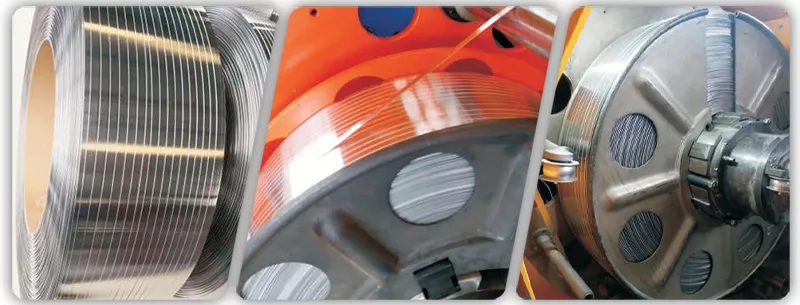
Interlocking Armoured Cable Aluminum Alloy Strip
Precision-engineered interlocking aluminum alloy strip designed for armored cable systems. It provides flexible locking structure, excellent impact resistance, and lightweight protection for industrial and commercial cable applications.
Finished Rewinding Cable Aluminum Alloy Strip
Pre-processed rewinding aluminum alloy strip with stable tension control and smooth surface finish, optimized for high-speed cable armoring and continuous production lines.
Armored Cable Aluminum Strip Manufacturing Process
The production of aluminum strip for cable armoring involves a series of precise and multi-step processes to ensure consistent product quality:
Raw material preparation: High-purity aluminum is combined with specific alloying elements (such as magnesium required for 5xxx series alloys) and melted in a furnace to produce molten aluminum.
Casting and hot rolling: The molten aluminum is cast into large slabs (ingots). These slabs are then heated and passed through heavy rolling mills to reduce their thickness to several millimeters.
Cold rolling: The aluminum strip is further rolled at room temperature to reach the final required thickness (e.g., 0.6 mm). This process improves hardness and ensures extremely high dimensional accuracy.
Annealing treatment: The cold-rolled aluminum strip is heat-treated in a controlled atmosphere. This process removes internal residual stresses and adjusts the microstructure, achieving an optimal balance between strength and ductility. Finishing and slitting: Wide coils are edge-trimmed and slit into narrow coils according to customer requirements.
Quality control and packaging: Each coil is strictly inspected before delivery to cable manufacturers, including tensile strength, elongation, and bending performance tests, followed by careful packaging.
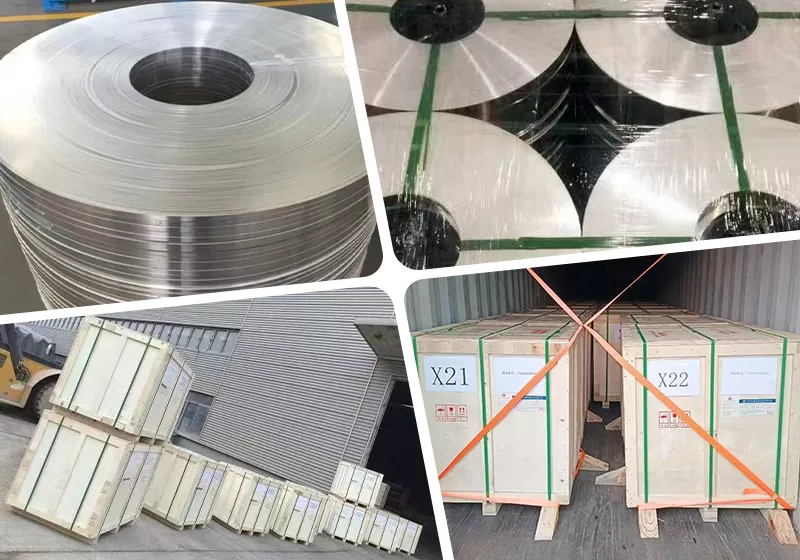
Packaging of Aluminum Strips for Cable Armoring
Wrapped with moisture-proof film and desiccants to prevent oxidation.
Protected with interleaving and edge guards to avoid damage.
Packed in pallets or wooden boxes with steel strapping.
Sealed with waterproof, dust-proof outer wrapping.
Labeled with specifications and batch tracking information.
Advantages of Aluminum Strip Compared to Steel
The characteristics of aluminum materials provide several significant advantages:
Lightweight: Aluminum has a low density, making cables manufactured with it much lighter than steel-armored cables, which greatly simplifies transportation, handling, and installation processes.
Non-magnetic: This is critical for single-core cables, as it eliminates the risk of overheating and power loss caused by eddy current losses in steel armoring.
Corrosion resistance: A natural protective oxide layer forms on the surface of aluminum, giving it strong resistance to rust and corrosion even in harsh environments such as underground and industrial conditions.
High strength and high ductility: 5xxx series aluminum alloys not only offer excellent tensile strength and impact resistance, but also maintain the flexibility required for bending and installation.
High cost-effectiveness: Although its material cost is generally comparable to steel, its lightweight nature reduces structural support requirements, and its excellent corrosion resistance effectively lowers long-term maintenance costs.
Why Haomei Aluminum
Haomei Aluminum specializes in high-performance aluminum strip materials for cable armoring and transformer applications. With advanced cold rolling, annealing, and precision slitting lines, we ensure stable quality and strict tolerance control.
If your project has specific requirements regarding cable type, alloy grade, or technical standards, please feel free to let me know, and I will provide more targeted and detailed information for you.