Interlocking aluminum alloy strip is a precision-engineered armoring material used in power cables, submarine cables, and industrial cable systems requiring mechanical protection, corrosion resistance, and flexible installation performance.
High mechanical interlocking strength for cable armor systems
Lightweight alternative to steel strip armoring
Compatible with automated cable armoring machines
Excellent corrosion resistance for marine and underground applications
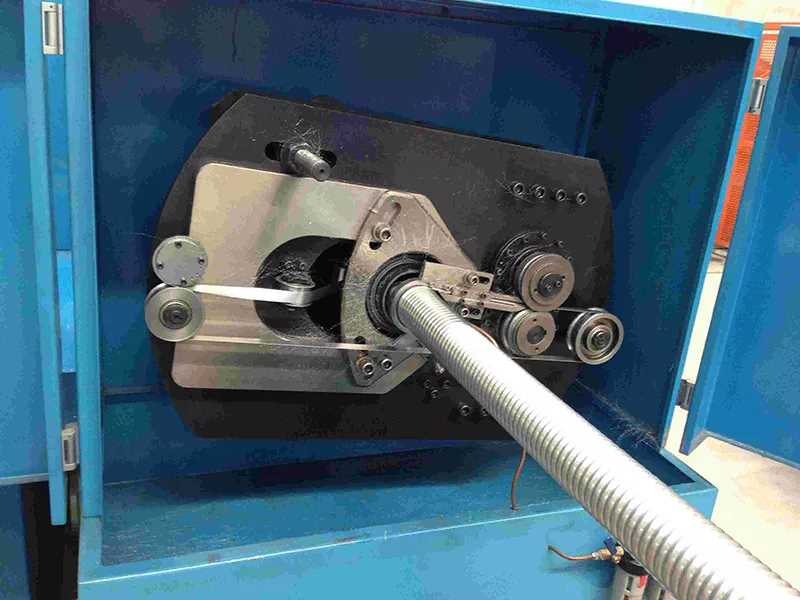
Aluminum strip is used to form a helically interlocked armor layer in cables, providing mechanical protection, flexibility, and corrosion resistance.
Our 5xxx series aluminum alloy strips are specifically designed for high-speed interlocking armoring lines. Compared to standard 1xxx series alloys, these strips contain higher magnesium content, offering superior structural integrity and fatigue resistance for MC cables and power cables.
What is Interlocking Aluminum Alloy Strip?
Interlocking aluminum alloy strip is a specially formed aluminum strip designed to mechanically lock during cable armoring,
creating a continuous protective layer around electrical and communication cables.
Unlike flat aluminum tape, interlocking structures provide improved structural integrity under bending, tension, and installation stress.
Interlocking Aluminum Alloy Strip for Armored Cable Technical Specifications
Parameter
Specification
Alloy
5052/5154/5154A
Thickness
0.3 – 0.8 mm
Width
20 – 500 mm (Custom Available)
Temper
O / H22 / H24
Surface
Smooth, Burr-Free, Oil-Free
Edge
Slit/Round
Packaging
Wooden Pallet/Wooden Case
Payment Terms
30% TT deposit and 70% balance before shipment, 100% LC at sight
Haomei Aluminum manufactures interlocking aluminum strip for cable armoring, supplying aluminum alloy strip for armored cable production under IEC 60502 and UL 1569 cable systems.
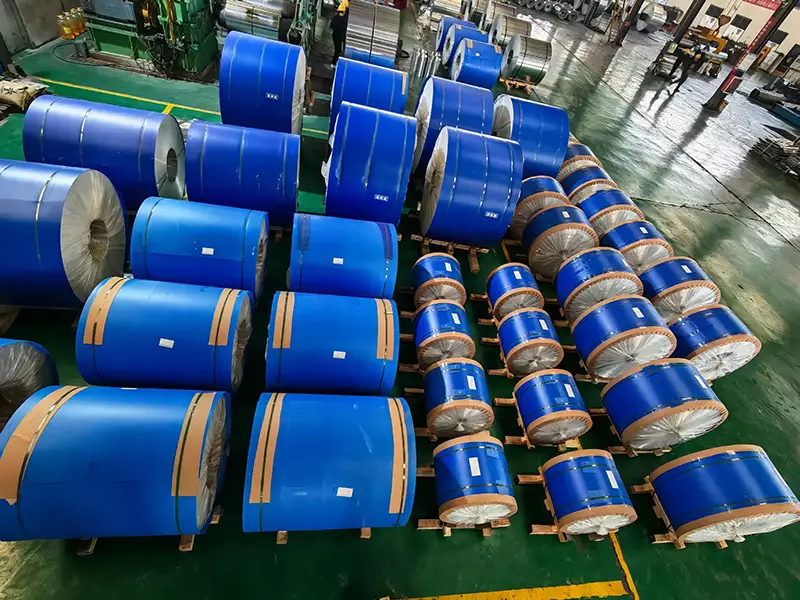
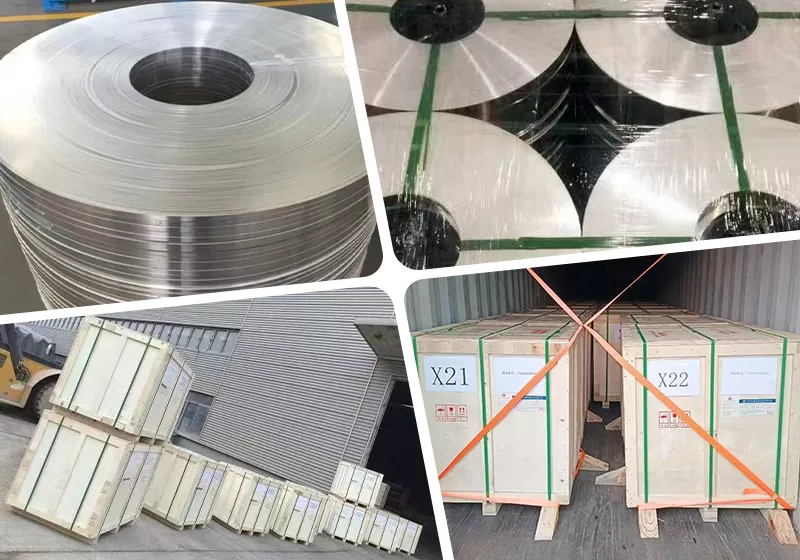
Interlocking aluminum strip stock for immediate delivery
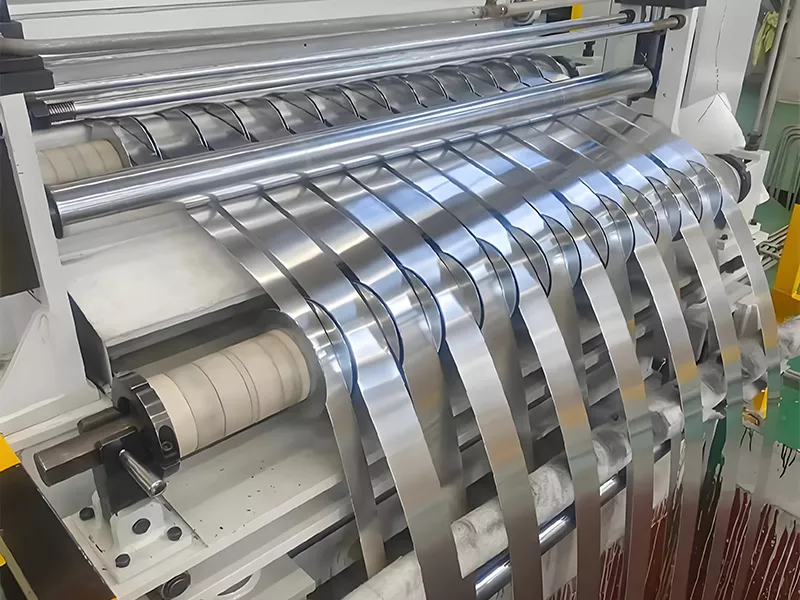
Aluminum strip rolling production line
Cable armoring strip manufacturing process
Interlocking Aluminum Alloy Strip for Armored Cable Quality Control
Our Interlocking Aluminum Alloy Strip for Armored Cable undergoes strict quality control in accordance with international industrial standards for cable armoring materials. Each production batch is fully inspected to ensure consistent mechanical performance and reliable forming behavior during high-speed interlocking processes.
Quality testing includes tensile strength testing, elongation measurement, and comprehensive surface inspection to guarantee defect-free, burr-free, and uniform strip quality. This ensures stable performance in MC cables, power cables, and industrial armoured cable systems.
Every coil of aluminum strip is fully traceable, from raw material smelting to final slitting and packaging, supporting full quality transparency and long-term reliability for global cable manufacturers.
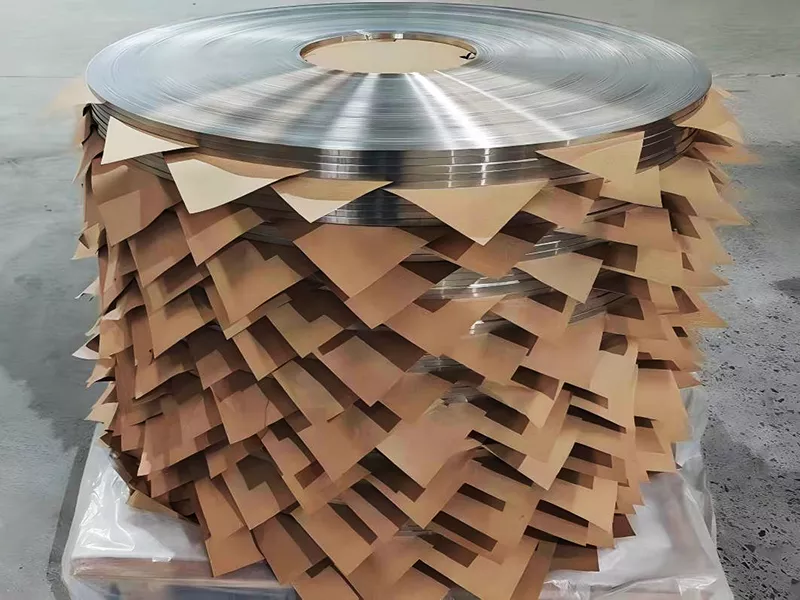
Our interlocking aluminum armor strips for cable armoring are packaged using industrial-grade moisture protection and mechanical reinforcement systems to ensure safe global delivery.
Packaging is designed to prevent oxidation, deformation, and edge damage during long-distance sea and land transportation.
Moisture & oxidation protection: Wrapped with VCI anti-corrosion film and desiccants to prevent aluminum surface oxidation during storage and transit.
Mechanical protection layers: Interleaving paper, foam padding, and edge guards reduce deformation risk during stacking and handling.
Palletized export packaging: Strips are secured on fumigated wooden pallets or reinforced wooden boxes with steel strapping for international shipping compliance.
Environmental sealing: Outer waterproof and dust-proof wrapping ensures stability under humidity, rain exposure, and sea freight conditions.
Full traceability labeling: Each package includes specification marking, batch number, alloy grade, and production traceability code for quality assurance and inventory control.
Interlocking Aluminum Strip vs Steel Armor Strip
Feature
Aluminum Interlocking Strip
Steel Armor Strip
Weight
Lightweight
Heavy
Corrosion Resistance
High
Medium
Flexibility
Excellent
Limited
Cost Efficiency
High in long term
Moderate
FAQ
What are the advantages of 5154A for cable armoring applications?
5154A offers an optimal balance between flexibility and tensile strength, ensuring the armor layer does not crack during tight-radius bending while maintaining high compressive strength and long-term mechanical stability.
Is the surface free from oil, contamination, and burrs?
Yes. All aluminum strips undergo professional degreasing and strict edge trimming processes to ensure a clean silver surface, burr-free edges, safe handling, and stable forming performance in high-speed interlocking production lines.
Why choose aluminum alloy strip instead of traditional steel strip for interlocking armor?
Aluminum alloy strip reduces weight by approximately 50% and is fully non-magnetic, eliminating eddy current losses. It is especially suitable for AC power cables and submarine composite cables, while also offering better corrosion resistance than galvanized steel and lower lifecycle cost.
Is 5052 aluminum alloy suitable for marine environments?
5052 provides good resistance to seawater corrosion. However, for long-term full immersion or high-flow marine conditions, 5154A is recommended due to its higher magnesium content and superior pitting corrosion resistance.
How to select temper condition for interlocking armor forming?
For complex S-type interlocking structures and high-speed forming lines, O temper is recommended due to maximum elongation. For standard medium and low-voltage cables, H22/H24 temper provides a balance between strength and formability. For heavy-duty protection armor, H26 temper is preferred for higher mechanical resistance.
How does thickness tolerance affect interlocking armor quality?
Interlocking forming requires extremely consistent thickness. A deviation beyond ±0.03mm may cause loose locking or unstable tension. Our strips are controlled within ±0.01mm with no edge wave, ensuring airtight armor structure and strong side pressure resistance.