
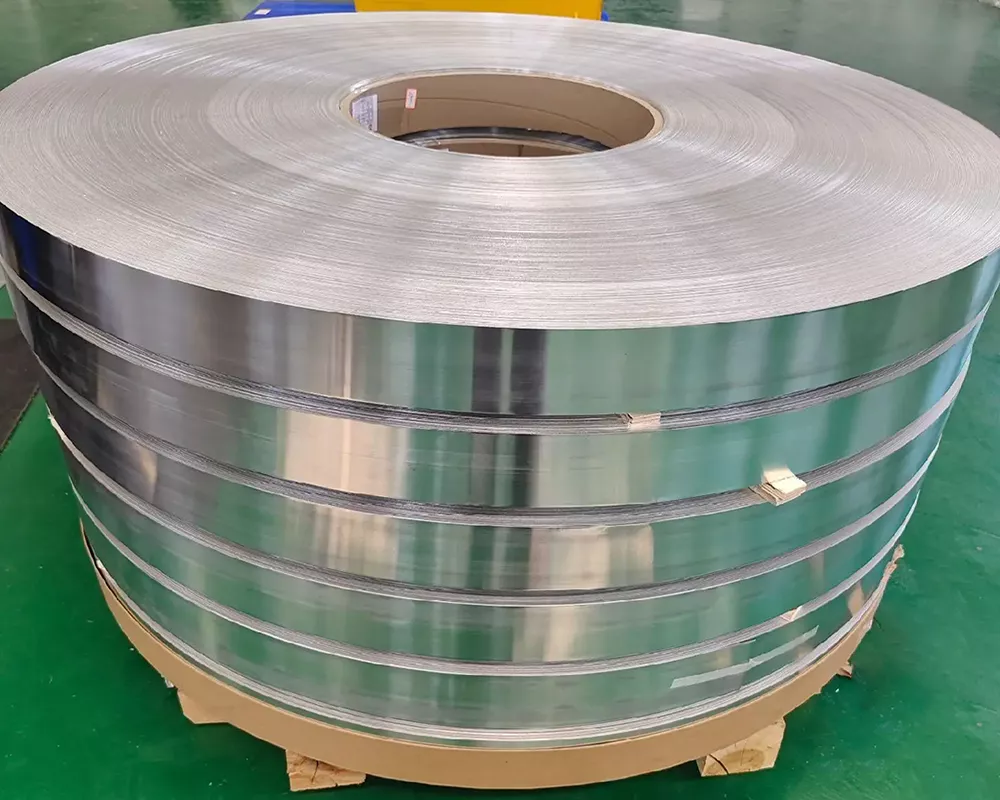
Transformer aluminum strip is widely used as winding conductor material for dry type transformers, oil immersed transformers, distribution transformers and special electrical equipment. Haomei supplies precision rolled aluminum strip in 1050, 1060, 1070 and 1350 electrical grades with high conductivity, smooth surface and controlled dimensional tolerance for transformer manufacturers worldwide.
What is Transformer Aluminum Strip?
Transformer aluminum strip is a high-conductivity material used for transformer windings. It is produced through precision rolling and slitting processes to ensure excellent electrical conductivity, low resistance, and stable electromagnetic performance.
Our aluminum strip is specially designed for the electrical industry, featuring high conductivity and a smooth surface finish. It is widely used in dry-type and oil-immersed transformer windings, significantly reducing coil weight and helping lower overall production costs.
-
Edge Quality
Burr-free, rounded, or square edges available to prevent insulation damage.
-
Surface Control
Clean, oil-free surface with no scratches or metal inclusions.
Technical Specifications
| Alloy | 1050 / 1060 / 1070 / 1350 |
|---|---|
| Thickness | 0.08 – 3.0 mm |
| Width | 10 – 1650 mm |
| Temper | O (Soft Annealed) |
| Conductivity | ≥ 61% IACS |
| Edges | Rounded / Square / Chamfer |
| Thickness Tolerance | ±0.02mm to ±0.08mm |
| Width Tolerance | +0.3mm to +2.5mm |
| Surface Treatment | Smooth edges, burr-free; can be oiled/passivated. |
| Paper Core Internal Diameter | Ø 150mm,Ø300mm, Ø400mm, Ø500mm paper core, special internal diameter core and without paper core on special request |
| Packaging | Wooden Pallet/Wooden Case |
| Delivery Time | 7-10 working days |
| MOQ | 2 Tons |
Aluminum Strip Electrical Conductivity for Transformers
- 1050 is better than 60% IACS.
- 1060 is be better than 61.5% IACS.
- 1070 is better than 62.7% IACS.
- 1350 is better than 62% IACS.
Why Aluminum Strip is Used in Transformer Windings
Aluminum strip is widely used in transformer windings because it offers an excellent balance of electrical performance, manufacturing efficiency, and cost savings. In modern dry-type transformers, oil transformers, and distribution transformers, aluminum conductor strip has become a preferred winding material for many manufacturers due to its practical advantages in industrial production.
One of the main reasons aluminum strip for transformer winding is commonly selected is its lightweight property. Aluminum has a lower density than copper, which means the total weight of the transformer winding can be significantly reduced. Lighter winding structures make transformer assembly easier, improve transportation efficiency, and lower handling costs during installation. For large-capacity transformers, reducing winding weight can also decrease mechanical stress on internal components.
Lower material cost is another major advantage. Compared with copper, aluminum strip usually provides a more economical solution while maintaining reliable electrical conductivity. This cost-performance ratio makes aluminum conductor strip especially suitable for power distribution equipment, industrial transformers, and renewable energy transformer systems where cost control is important. Manufacturers can reduce raw material expenses while keeping stable electrical performance.
Although aluminum has lower conductivity than copper on a per-volume basis, its conductivity is still highly suitable for transformer applications when proper cross-sectional dimensions are used. High-quality electrical winding strip made from pure aluminum provides stable current transmission, low resistance, and dependable operation in medium and low-voltage transformers. Properly designed aluminum windings ensure efficient energy transfer and reduced power loss.
Another reason aluminum strip is preferred is easier forming and processing. Aluminum is softer and more flexible than many other conductive materials, making it easier to bend, shape, and wind into transformer coils. During transformer production, this helps improve manufacturing efficiency and reduces the risk of cracking or deformation during coil winding. Precision slitting and smooth edge treatment further improve winding quality and insulation compatibility.
Aluminum strip also helps lower overall operating cost. Due to its lower purchase price and easier fabrication, transformer manufacturers can achieve lower production costs. In addition, well-designed aluminum windings can deliver long-term stable operation with minimal maintenance. This makes aluminum strip for transformer winding a cost-effective solution for utility projects, industrial power systems, and electrical distribution networks.
Efficient heat dissipation is another key factor. During transformer operation, winding materials generate heat because of electrical resistance. Aluminum has good thermal conductivity, allowing heat to spread more evenly through the winding layers. This contributes to improved cooling performance, reduced hot spots, and enhanced transformer reliability. Effective thermal management can extend transformer service life and improve operational safety.
As global transformer manufacturing continues to optimize efficiency and sustainability, electrical winding strip made from aluminum is increasingly recognized as a reliable conductor material. It combines lightweight construction, lower investment cost, excellent processability, and dependable electrical performance, making it suitable for a wide range of transformer winding applications.
For manufacturers seeking a balance between performance and economy, aluminum strip remains one of the most practical choices for transformer coil production. Its combination of conductivity, heat dissipation, ease of forming, and cost efficiency makes it a widely adopted material in modern transformer winding systems worldwide.
Dimensional Tolerances of Transformer Aluminum Foil & Strip
Thickness Tolerance of Aluminum Foil & Strip for Transformers
| Thickness | 0.2-0.4 | 0.4-0.8 | 0.9-1.1 | 1.2-1.6 | 1.8-2.5 |
|---|---|---|---|---|---|
| Tolerance | ±0.01 | ±0.015 | ±0.02 | ±0.025 | ±0.03 |
Width Tolerance of Aluminum Foil & Strip for Transformers
| Width | <100 | 100-200 | 201-500 | 501-1250 | >1250 |
|---|---|---|---|---|---|
| Tolerance | ±0.1 | ±0.2 | ±0.2 | ±1 | ±2 |
Transformer Aluminum Strip Edge Treatment & Quality Standards
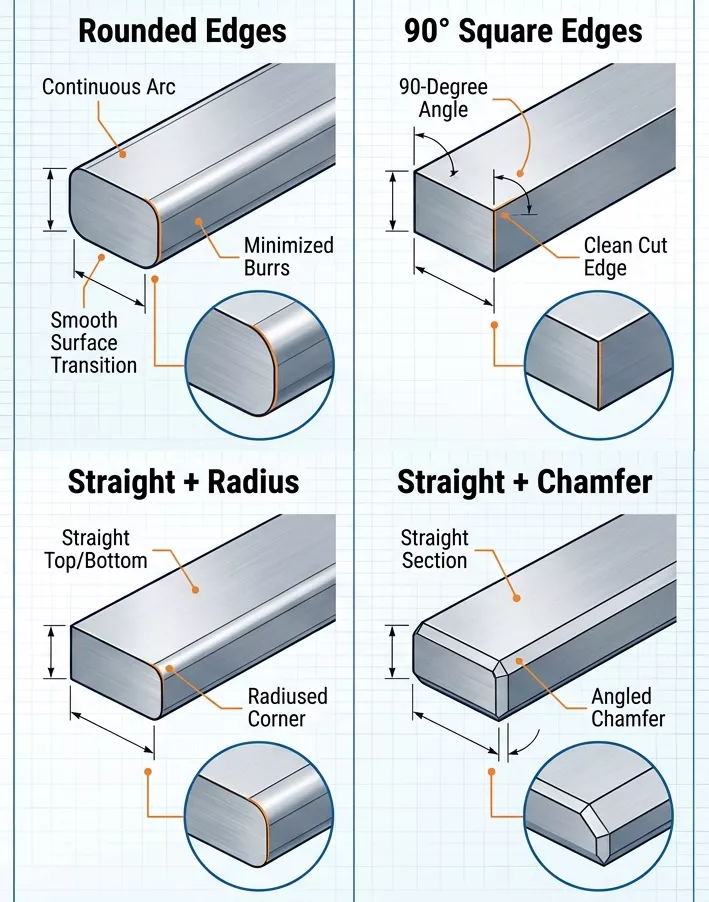
We provide precision edge treatment solutions for transformer aluminum foil and strip, ensuring smooth surfaces, controlled burr height, and stable winding performance. Different edge types are available to meet insulation safety, mechanical strength, and high-voltage application requirements.
Transformer Aluminum Strip Edge Treatment Types
-
Rounded Edges
Prevent insulation damage and improve winding safety in transformer aluminum strip applications.
-
90° Square Edges
Ensure precision structural consistency for electrical transformer winding systems.
-
Straight + Radius
Provides balanced mechanical strength with reduced stress concentration, improving long-term reliability.
-
Straight + Chamfer
Chamfered edges reduce burr risk and improve handling safety during industrial transformer manufacturing.
Edge Quality of Transformer Aluminum Foil & Strip
| The width of aluminum | burr’s height | collapsed side’s height |
|---|---|---|
| <0.2 | 0.01 | ≥0.05-0.1 |
| 0.2-1.0 | 0.015 | |
| 1.1-1.5 | 0.02 | |
| >1.6 | 0.03 |
All edge parameters are strictly controlled during slitting and inspection to ensure stable electrical performance and insulation reliability in transformer applications.
Transformer aluminum strip edge treatment with burr-free and rounded edges ensures higher winding safety and long-term transformer stability.
- Edge Burr Control: Strictly monitored during slitting process to prevent insulation damage.
- Dimensional Stability: Ensures consistent strip geometry for automated winding systems.
- Surface & Edge Inspection: 100% visual and instrument-based quality checking before delivery.
FAQ: Edge Quality Control
What is acceptable burr height for transformer aluminum strip?
Typically ≤ 0.03 mm for thin foil and ≤ 0.05 mm for thicker strip, depending on application and insulation requirements.
Why is edge quality important?
Poor edge quality may damage insulation layers, increase partial discharge risk, and reduce overall transformer reliability.
Transformer Aluminum Strip: Chemical Composition and Mechanical Properties
Transformer Aluminum Strip Chemical Composition
| Alloy | Si | Fe | Cu | Mn | Mg | Cr | Ni | Zn | Ti | Zr | Other Each | Other Total | Al |
| 1050 | 0.25 | 0.4 | 0.05 | 0.05 | 0.05 | - | - | 0.05 | 0.03 | - | 0.03 | - | 99.5 |
| 1060 | 0.25 | 0.35 | 0.05 | 0.03 | 0.03 | - | - | 0.05 | 0.03 | - | 0.05 | - | 99.6 |
| 1070 | 0.2 | 0.25 | 0.04 | 0.03 | 0.03 | 0.04 | 0.03 | - | 0.03 | 99.7 | |||
| 1350 | 0.1 | 0.4 | 0.05 | 0.01 | - | 0.01 | - | 0.05 | - | - | 0.03 | 0.1 | 99.5 |
Transformer Aluminum Strip Mechanical Properties
| Item | 0.08–0.20 mm | >0.20–3.00 mm |
| Alloy | 1050, 1060, 1070, 1350 | |
| Temper | O | |
| Tensile strength (MPa) | 60–95 | 60–95 |
| Elongation (%) | ≥20 | ≥25 |
Available Aluminum Grades for Transformer Strip
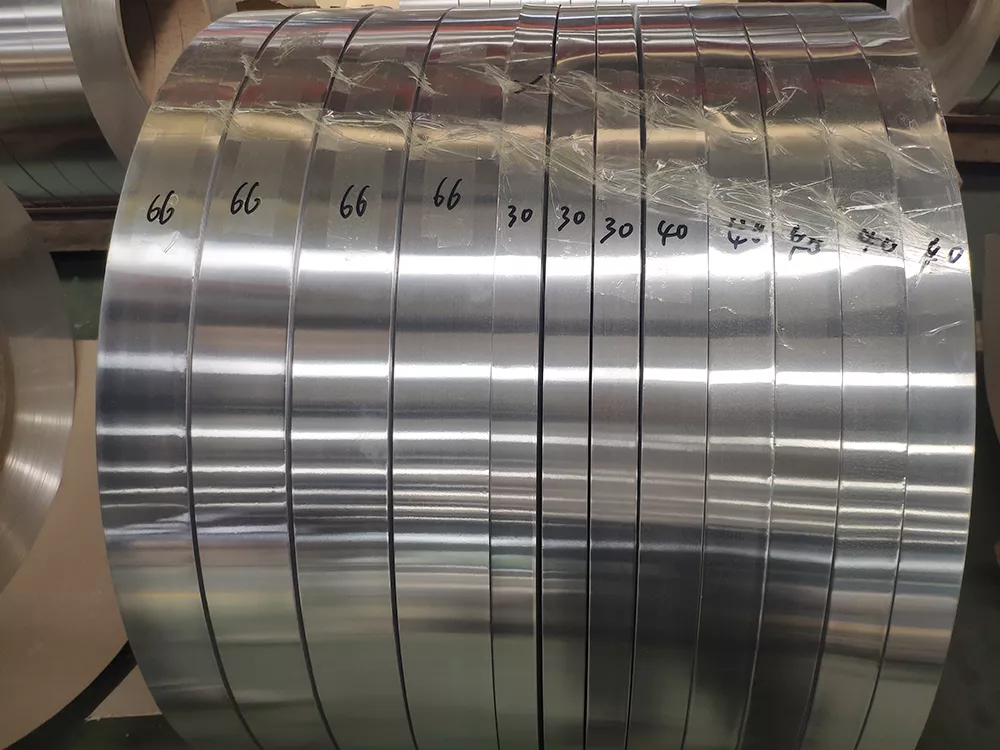 1050 O Transformer Winding Aluminum Strip
Highest purity grade (≥99.5%), optimized for maximum conductivity and precision winding performance.
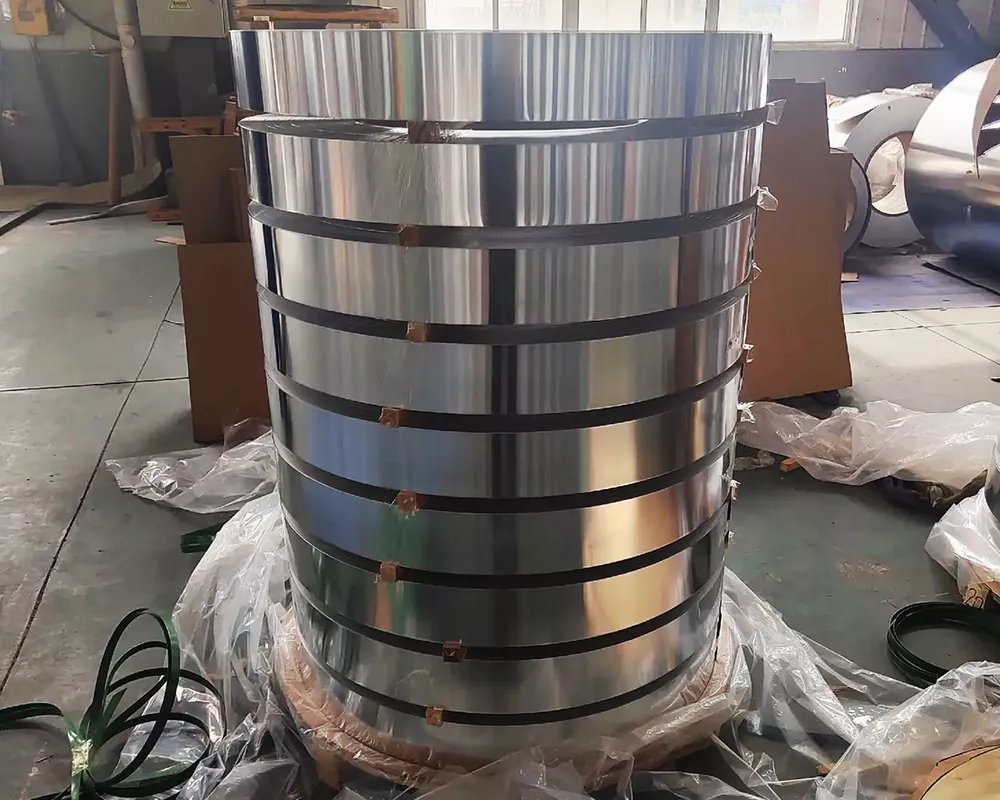 1060 O Transformer Winding Aluminum Strip
Balanced conductivity and mechanical strength for stable transformer winding applications.
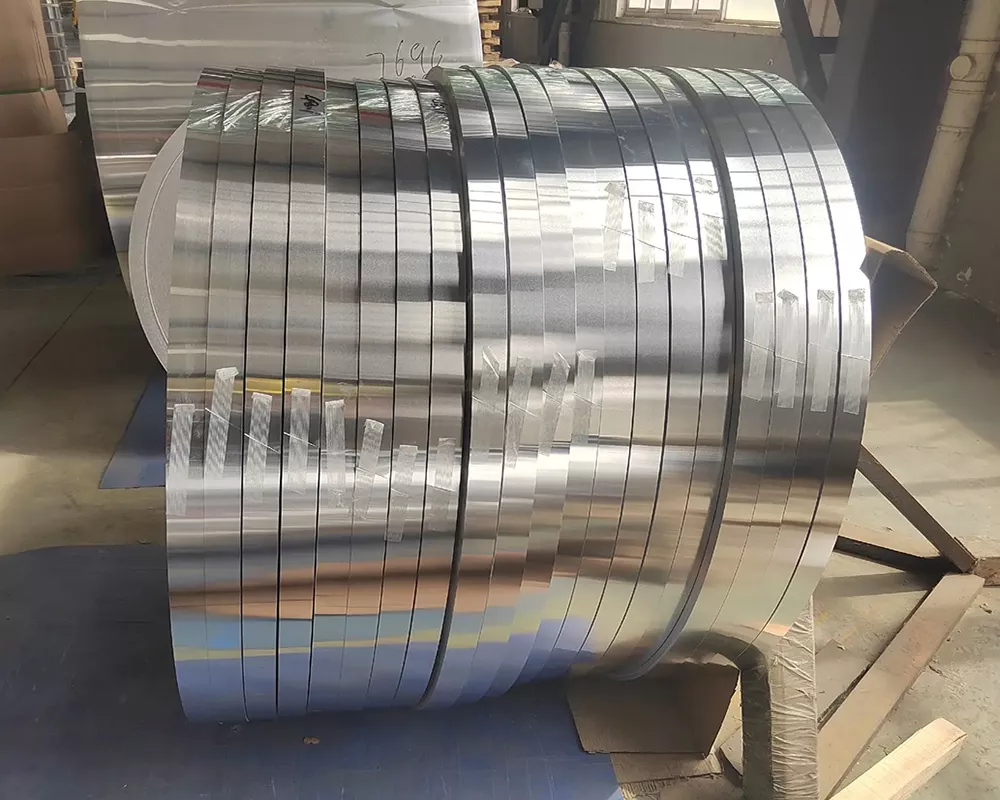 1070 O Transformer Winding Aluminum Strip
Enhanced conductivity grade designed to reduce energy loss in high-performance transformers.
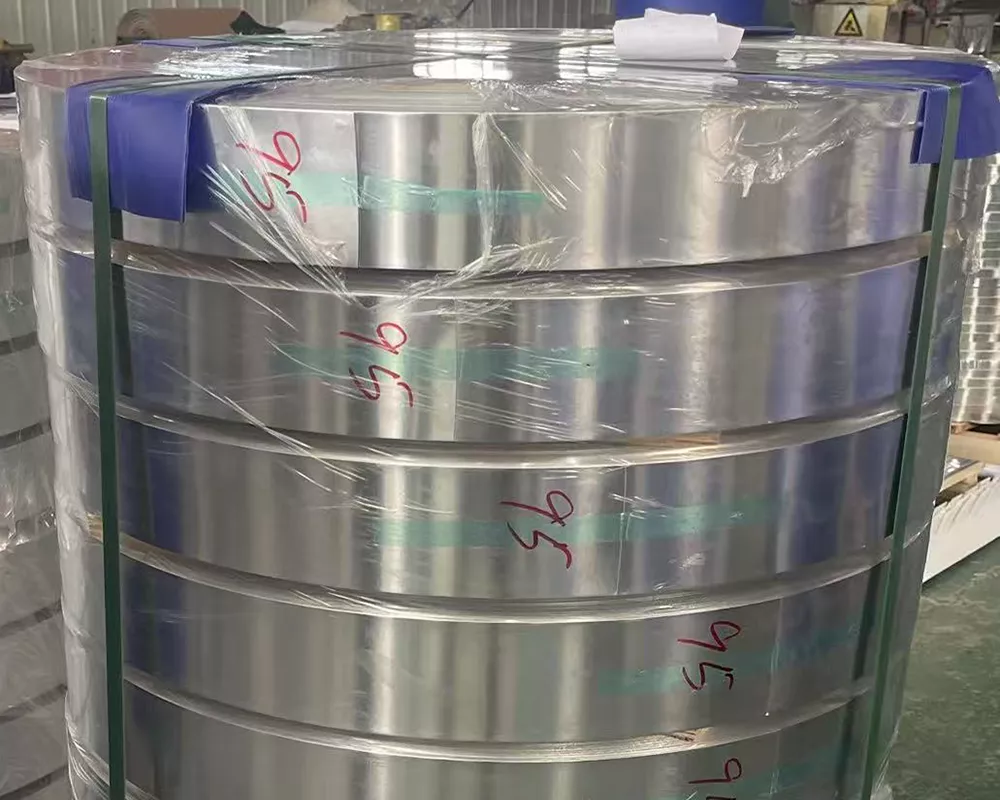 1350 O Transformer Winding Aluminum Strip
Industry-standard electrical aluminum widely used in power grid and large transformer manufacturing.
| Alloy | Purity | Conductivity | Application |
| 1050 | 99.5% | Good | Standard winding |
| 1060 | 99.6% | Higher | Dry type transformer |
| 1070 | 99.7% | Excellent | High efficiency transformer |
| 1350 | Electrical grade | Premium | Power transformer |
Features
Our transformer aluminum strip is engineered for high electrical performance, cost efficiency, and long-term reliability. Compared with copper strip, it provides a better balance of weight, cost, and conductivity for modern transformers.
Lightweight & Cost-Effective
With a density of only 2.70 g/cm³, aluminum is about one-third the weight of copper, reducing transformer weight by 25%–30%. Material cost is 30%–50% lower while maintaining comparable performance.
High Electrical Conductivity
Conductivity ≥61% IACS ensures efficient current transmission and reduced energy loss in transformer windings.
Excellent Corrosion Resistance
A dense Al₂O₃ oxide layer protects against moisture, dust, and industrial environments, ensuring long service life.
Fully Annealed & Easy Processing
O temper aluminum provides excellent ductility, allowing smooth bending and winding without cracking or deformation.
Precision Slitting & Burr-Free Edges
Advanced slitting technology ensures smooth, rounded, and burr-free edges, protecting insulation and improving safety.
Stable Performance & High Purity
High-purity aluminum reduces resistivity and eddy current loss, improving transformer efficiency and reliability.
Optional Surface Treatment
Anodized or epoxy coatings are available for enhanced corrosion resistance in harsh operating environments.
Eco-Friendly & Sustainable
100% recyclable material with low carbon emissions, supporting green transformer manufacturing and carbon neutrality goals.
Application
- Oil-immersed transformer windings
- Dry-type transformer coils
- Reactors & filters
- EV charging station transformers
- Wind / solar step-up transformers
- Special rectifier transformers
Why Choose Haomei Aluminum | Trusted Transformer Aluminum Strip Manufacturer
Haomei Aluminum delivers high-performance transformer aluminum strips engineered for stability, conductivity, and precision manufacturing. Our products are designed to meet strict global transformer industry standards.
- Excellent Formability Uniform thickness ensures smooth winding and stable processing performance.
- Burr-Free Precision Edges Safe handling and reduced insulation risk during transformer assembly.
- High Electrical Conductivity ≥60% IACS verified performance for efficient energy transmission.
- Clean & Oil-Free Surface Smooth finish ensures reliable insulation bonding and consistent quality.
- Factory-Direct Pricing Competitive cost advantage with stable long-term supply capability.
- Free Samples Available Evaluate material performance before bulk procurement.
- Full Material Certification Includes chemical composition, conductivity test, mechanical properties, and hardness reports.
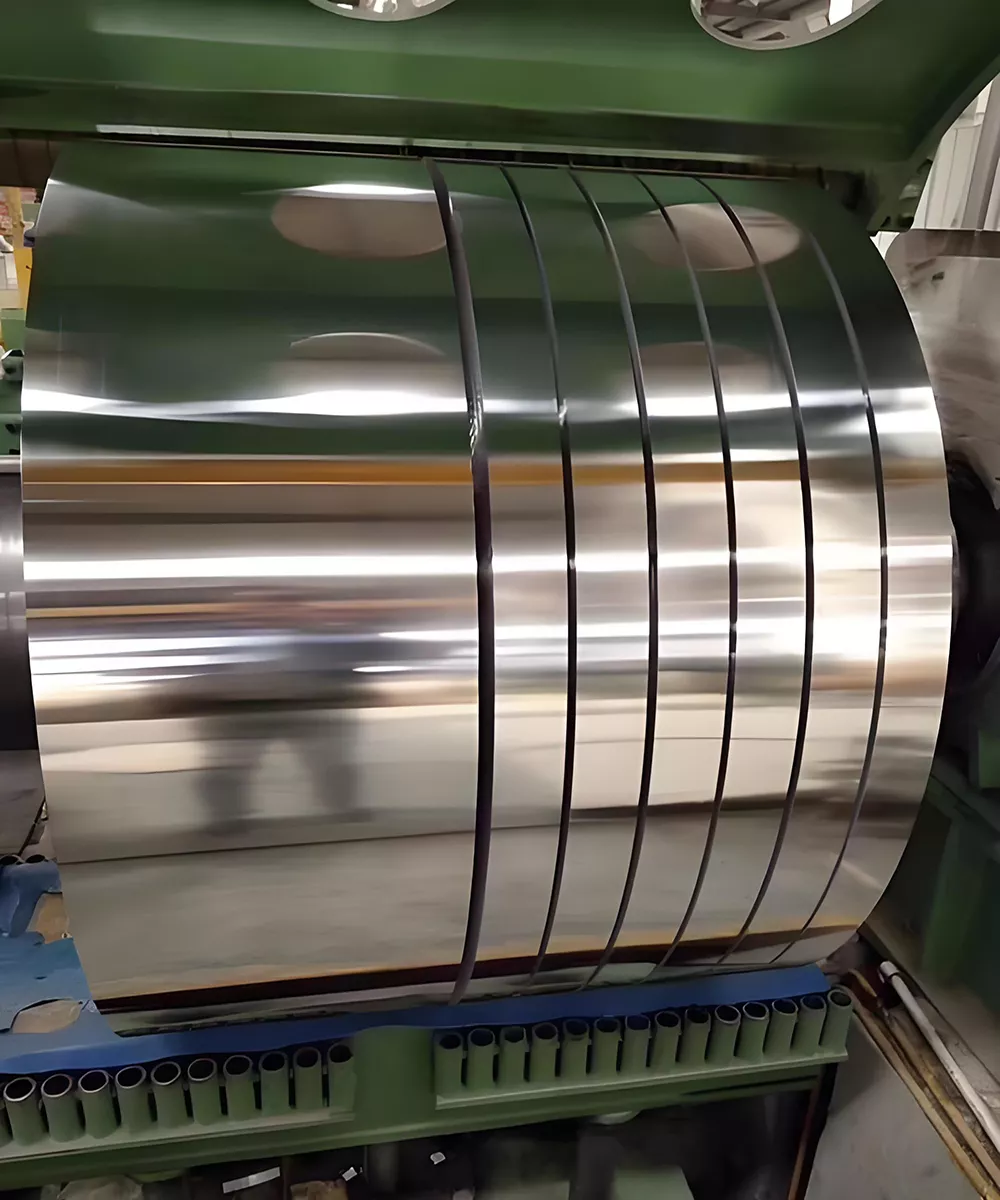
Our manufacturing system follows strict quality control standards to ensure consistency, reliability, and compliance with international transformer industry requirements.
Transformer Aluminum Strip Inspection & Quality Control
Strict in-house inspection ensures stable electrical performance, consistent thickness, and high reliability for transformer aluminum strip and copper strip applications.
In-house Inspection Procedures
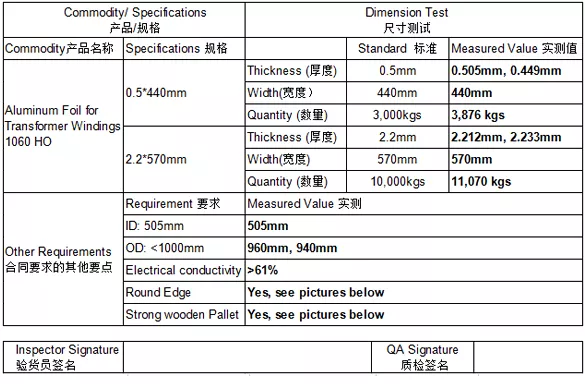
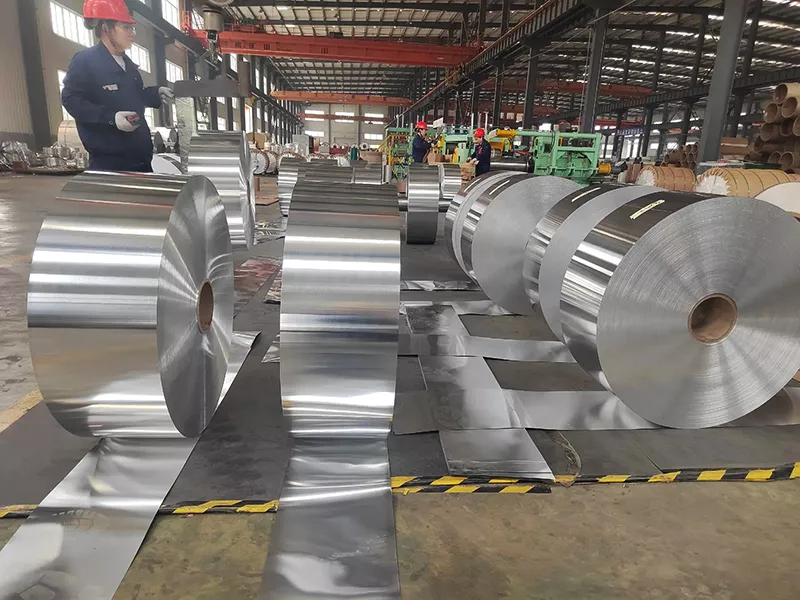
- Visual inspection of all transformer aluminum strip coils for surface defects and burr-free edges
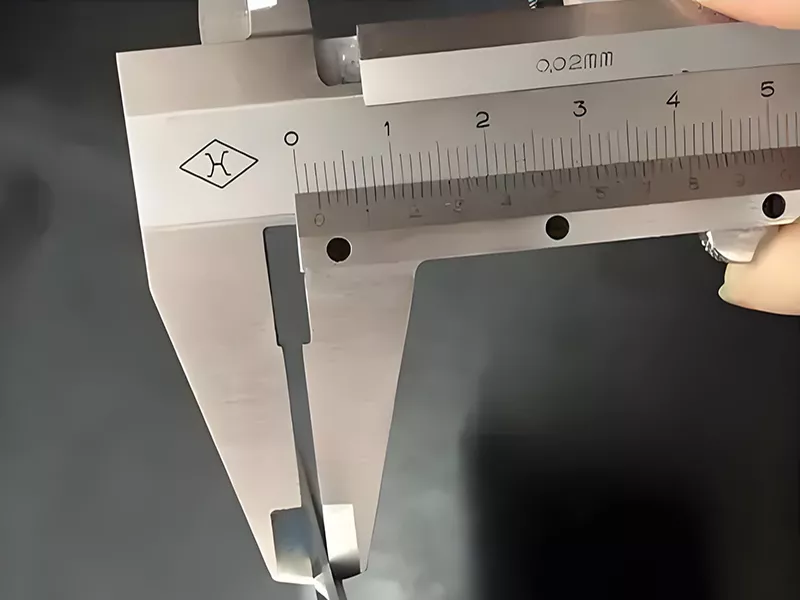
- Dimensional checks for thickness, width, and tolerance consistency from each production lot
- Verification of material test certificates (MTC) including conductivity and chemical composition
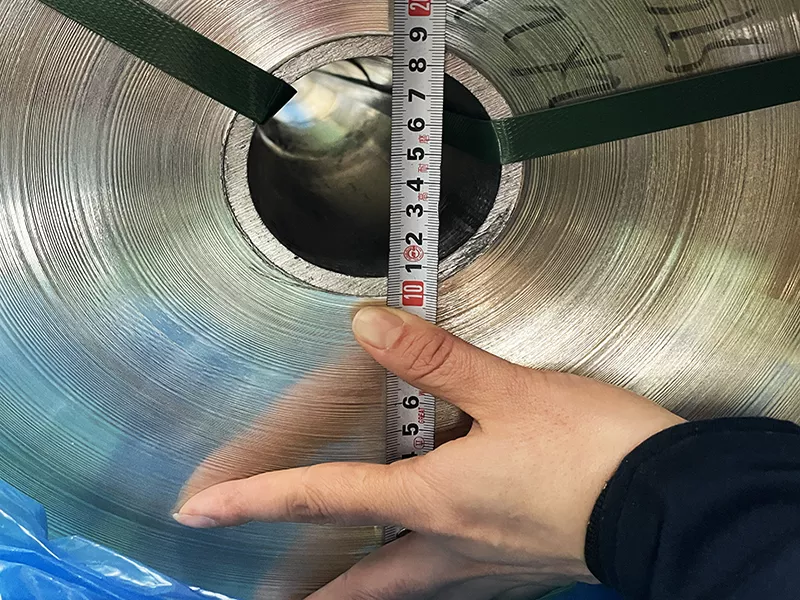
Inspection Report
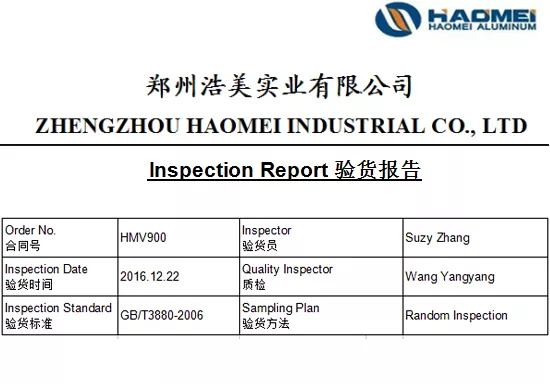
Final Inspection Before Delivery
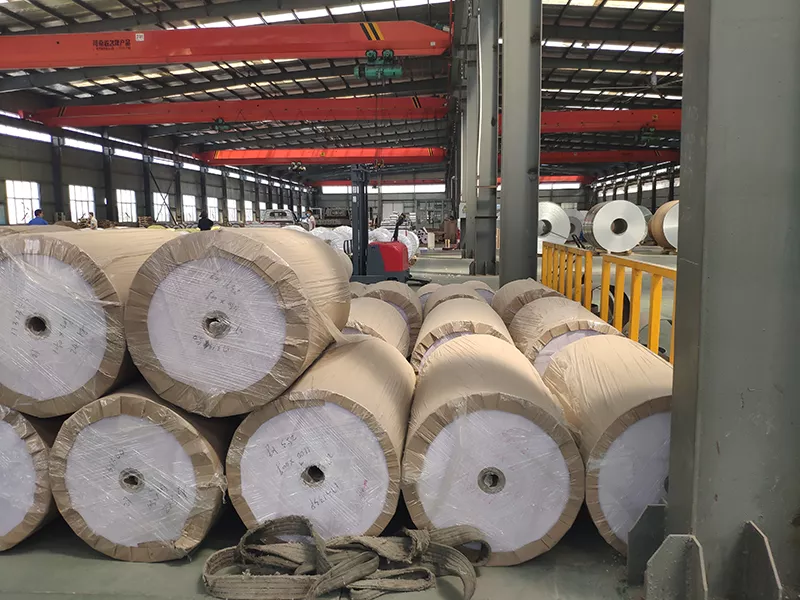
Transformer Aluminum Strip Packaging
At Haomei Aluminum, we provide safe, export-standard packaging to ensure transformer aluminum strip arrives in perfect condition for production use.
Standard Packaging
- Fumigation-free wooden pallets or wooden cases
- Suitable for sea freight and international export
- Moisture-proof and corrosion-resistant protection
Coil Protection Structure
- Strong paper core for stable winding support
- Kraft paper or interlayer protection between coils
- Outer wrapped with moisture-proof film and protective paper
- Edge protection to avoid damage during handling
Packaging Types
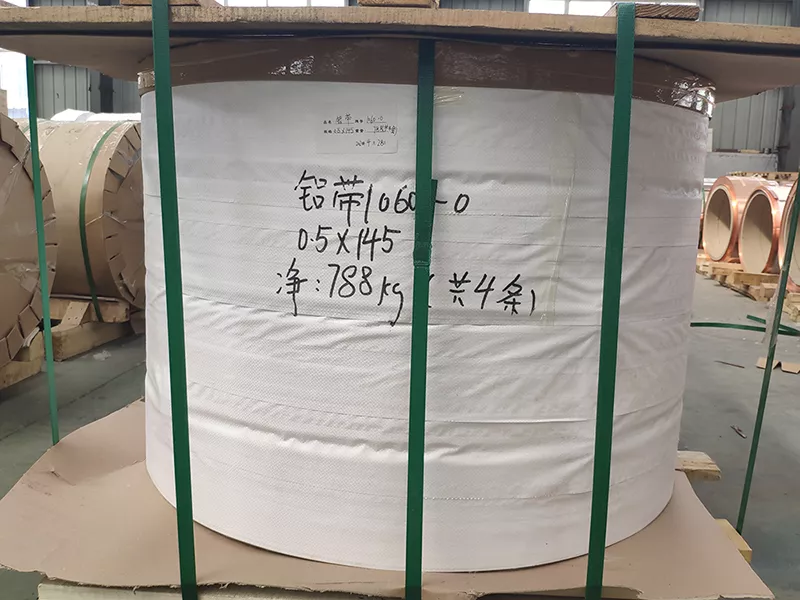
Vertical packing is designed for space-saving container loading, maximizing shipment efficiency for export logistics.
Horizontal packing is ideal for forklift handling, warehouse storage, and smooth machine feeding during production.
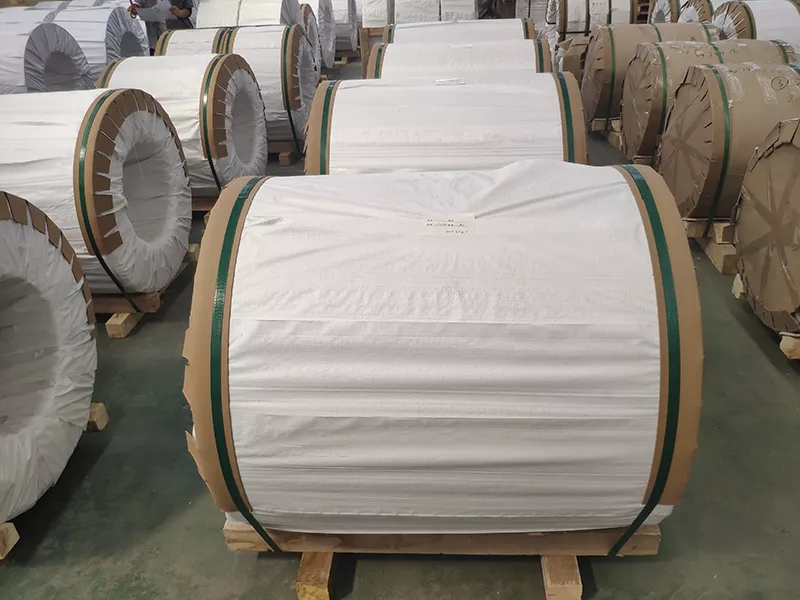
Both packaging methods are widely used for transformer aluminum strip, copper strip, and cable armoring tape exported globally by Haomei Aluminum.
Custom Packaging
We support customized solutions based on customer requirements:
- Special export marking and labeling
- Reinforced packaging for long-distance shipping
- OEM packaging options
Quality Protection
Our packaging ensures transformer aluminum strip remains:
- Scratch-free and clean
- Free from deformation
- Ready for direct use in transformer winding
Transformer Aluminum Strip vs Copper Strip
Aluminum strip costs about one-third of copper strip. Under the same current-carrying capacity, the cross-sectional area needs to be increased by approximately 60%. However, the overall transformer cost can be reduced by 20–30%, making it especially suitable for distribution transformers.
| Property | Aluminum Strip | Copper Strip |
| Conductivity | ≥ 60% IACS | ≈ 99.8% IACS |
| Density | 2.7 g/cm³ | 8.9 g/cm³ |
| Weight | Lightweight | Heavy |
| Cost | Lower | Higher |
| Corrosion Resistance | Good | Moderate |
| Thermal Conductivity | Lower than copper | Higher |
| Mechanical Strength | Moderate | Higher |
| Recyclability | Recyclable | Highly recyclable |
| Application | Cost-sensitive, lightweight transformers | High-performance, compact transformers |
Thermal performance is another important comparison. Both materials can provide effective heat dissipation, but aluminum's lighter density often contributes to better weight optimization in large coil structures. Copper may perform better in compact spaces where high current density is required, while aluminum works well in larger winding designs focused on cost control.
To learn more about copper conductor materials for transformer winding, see our Transformer Copper Strip page.
FAQ
What is the delivery time?
Standard specifications take 7–10 days, while customized slitting or special specifications take 15–20 days, depending on order quantity and processing complexity.
Do you support custom sizes?
Yes, we support customized thickness from 0.2–3.0mm, width from 20–1600mm, O-temper/H-temper hardness, and various surface treatments, and can provide coil or fixed-length cutting.
What is the minimum order quantity (MOQ)?
Sample orders start from about 1 ton, bulk production starts from about 5 tons, and the MOQ can be flexibly adjusted according to project requirements.
Do you provide material test certificates or MTC?
Each batch of products is supplied with EN 10204 3.1 Mill Test Certificate (MTC), and SGS/BV third-party inspection reports are available, complying with ASTM B209 and EN 573 standards.
How is the product packaged for international shipping?
It is packed with moisture-proof paper, plastic film, steel strapping reinforcement, and wooden pallets or fumigation-free wooden cases, and supports vertical or horizontal container loading.
What are the advantages of transformer aluminum strip compared to copper strip?
Aluminum strip is lighter (about 1/3 of copper), lower in cost (30%–40%), and has a conductivity of about 61% IACS, making it suitable for small and medium-sized transformer designs.
What is the difference between 1060 aluminum and 1350 aluminum for transformers?
1060 aluminum has better processing performance and slightly higher mechanical strength, while 1350 aluminum has higher conductivity, making it more suitable for power winding applications.
Can burr-free edges be guaranteed?
Through precision slitting and multi-stage inspection control, burrs are controlled at ≤0.03mm for thin materials and ≤0.05mm for thicker materials, ensuring safe and stable winding performance.
What is the optimal thickness for dry-type transformer windings?
Generally 0.2–3.0mm, depending on current, heat dissipation, and electromagnetic design requirements.