
T2M copper alloy, with its exceptional conductivity and durability, is the material of choice for transformer windings. In the transformer manufacturing field, copper is one of the most critical materials, and its superior conductivity, durability, and versatility make it the preferred choice for transformer windings, particularly in T2M alloy form. T2M copper alloy is specifically designed to meet the demanding requirements of transformer applications, ensuring reliable and efficient performance.
What is T2M Copper Alloy?
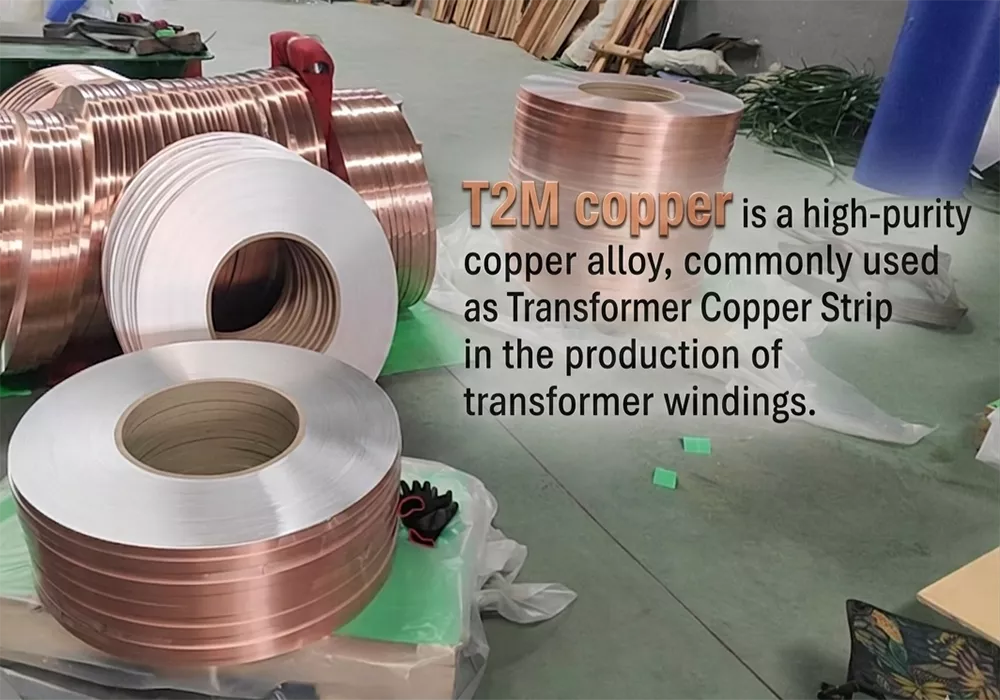
T2M copper is a high-purity copper alloy, commonly used as Transformer Copper Strip in the production of transformer windings. With a purity of 99.9%, the "T2" designation guarantees outstanding electrical conductivity, excellent corrosion resistance, and mechanical properties that are crucial for long-lasting and high-performance transformer components. This makes T2M copper alloy an ideal choice for manufacturers seeking optimal conductivity and power transmission efficiency in their transformer designs.
Why Choose T2M Copper for Transformer Windings?
T2M copper is a top choice for transformer windings due to its exceptional properties that ensure reliable performance and long-lasting efficiency. Here’s why T2M copper stands out in transformer applications:
- High Electrical Conductivity: T2M copper offers superior conductivity, ensuring minimal energy loss and optimal power transmission in transformers. This makes it ideal for high-efficiency transformers.
- Corrosion Resistance: Even under harsh environmental conditions, T2M copper maintains its structural integrity and resistance to corrosion, ensuring a longer service life.
- Excellent Ductility and Malleability: With high malleability, T2M copper is easy to shape and wind into transformer coils, making it an ideal material for manufacturing reliable transformer components.
Whether you are designing new transformers or upgrading existing ones, T2M copper provides the durability, efficiency, and flexibility needed to meet the highest industry standards.
T2M Copper Alloy Specifications for Transformer Windings
T2M copper alloy is specially designed for transformer windings, offering high conductivity and durability. Available in a range of sizes, these specifications ensure a perfect fit for modern transformer applications. Common sizes include:
| Specification | Dimensions (mm) |
| 1.2446 | 440 |
| 1.2446 | 500 |
| 1.2446 | 570 |
| 0.7112 | 485 |
These sizes are carefully selected to maximize transformer efficiency, allowing manufacturers to choose the optimal specification for their specific needs. Whether you’re designing small or large-scale transformers, T2M copper alloys provide unparalleled performance in electrical conductivity, strength, and reliability.
Advantages of Using T2M Copper in Transformers: Why It's the Superior Choice
Improved Transformer Efficiency
When it comes to transformer materials, copper stands out due to its unmatched electrical conductivity. T2M copper, in particular, excels in transferring electrical current with minimal resistance, ensuring a higher transformer efficiency. This superior conductivity helps reduce energy loss, improving overall transformer performance and significantly extending its service life.
Furthermore, T2M copper's high resistance to corrosion and oxidation means that it maintains optimal performance over time, even in harsh environmental conditions. This ensures that the transformer remains operational with less frequent maintenance, lowering long-term repair costs.
Enhanced Durability & Reduced Maintenance
One of the standout benefits of T2M copper is its durability. Its corrosion resistance and antioxidation properties make it highly effective in environments that may challenge other materials. This contributes to a more reliable transformer with fewer failures, lowering operational downtime and the need for expensive repairs or replacements.
Weight and Cost Considerations: A Long-Term Investment
While copper is typically heavier and more costly compared to alternatives like aluminum, its long-term benefits far outweigh the initial investment. By significantly improving energy efficiency, copper not only reduces electricity costs but also helps avoid costly downtime and repairs. In high-performance applications, such as industrial transformers, the performance gains justify the extra cost.
FAQ
Why do transformer windings use copper instead of other materials?
Copper has excellent conductivity, durability, and antioxidation properties, making it the ideal material for transformer applications.
How does T2M copper differ from other copper alloys used in transformers?
T2M copper has a higher purity (99.9%) compared to lower purity alloys like ETP copper, offering superior conductivity.
How does copper strip size affect transformer efficiency?
The copper strip size affects the current-carrying capacity of the transformer. Proper size selection ensures minimal energy loss and optimal performance.